Specified materials and parts
The customer-specified textile, thread, support or other supplied components.
 Discuss a component
RESEARCH AND PROCESS DEVELOPMENT
A component drawing defines the result. AJSM develops the fixtures, work instructions, inspection criteria and operator qualification needed to achieve and check it.
Follow the development path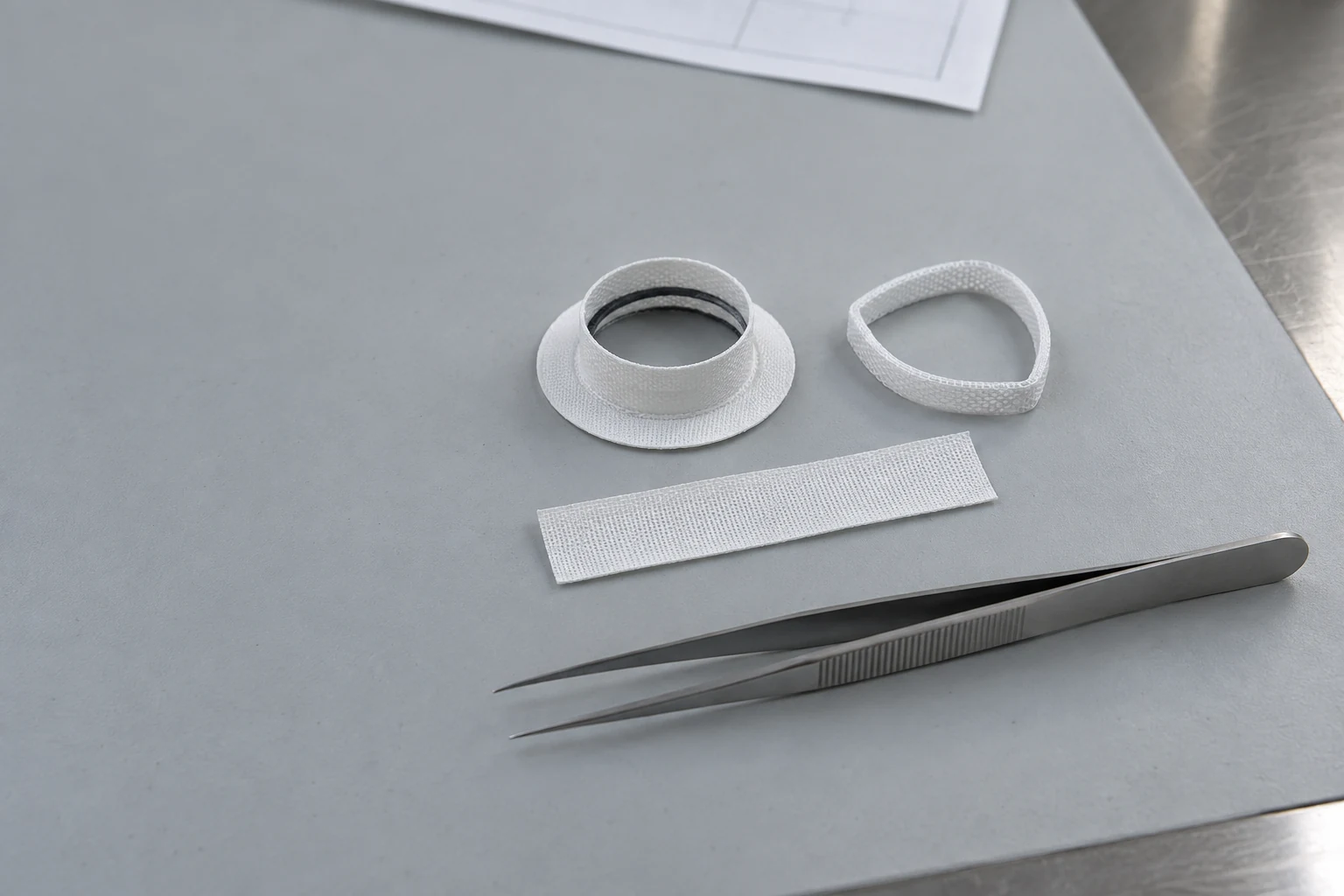
THE PROGRAMME HANDOFF
The customer-specified textile, thread, support or other supplied components.
Agreed preparation, fitting, sewing, attachments and inspection for the component.
The completed cuff, covered core or specified subassembly with the required records.
FROM DRAWING TO EVIDENCE
Each requirement remains tied to the component programme. The record beside every stage gives the device manufacturer a basis for assessment.
Requirement review
Review the drawing, geometry, specified materials, supplied components and required delivery state.
Review evidenceDrawing revision · agreed scope
Material preparation
Set the identification, handling, protection and preparation steps for the specified materials.
Review evidenceMaterial and lot records · preparation instruction
Workstation setup
Define the holding method, operator visibility and handling between stages around the component.
Review evidenceFixture or equipment details · work instruction
Sewing and assembly
Establish the order of work, textile coverage, seam position and component handling.
Review evidenceApproved method · operator competency
Inspection
Agree the visual features, dimensions, methods and limits that apply to the component.
Review evidenceInspection method · results and disposition
Records and handoff
Link the materials, work performed and inspection outcome to the agreed delivery records.
Review evidenceLot or work-order linkage · delivery records
PRACTICAL DEVELOPMENT
The practical questions shape the method: how to position the component, sequence the work, give the operator a clear view and check the required features.
THREE STARTING POINTS
The deliverables and qualification requirements are agreed for the individual programme.
Develop a practical manufacturing method around the required geometry, materials and supplied state.
Review how an established method can be implemented locally with the right tools, instructions and checks.
Prepare for local training, practice and assessment against the programme’s defined requirements.
A CLEAR OPERATING SCOPE
AJSM’s component-development scope covers the preparation, shaping, sewing and assembly of specified textiles and supporting parts, together with the agreed inspection and records.
Upstream yarn and fabric formation, sterile packaging, terminal sterilisation, complete-device assembly and finished-device release require their own confirmed scope and evidence. Defining that boundary keeps every technical discussion clear.