Support
The underlying circular form establishes the component geometry.
 Discuss a component
VALVE REPLACEMENT
A mechanical valve sewing cuff places a broad textile margin around a rigid circular support so implantation sutures can secure the device.
Explore the construction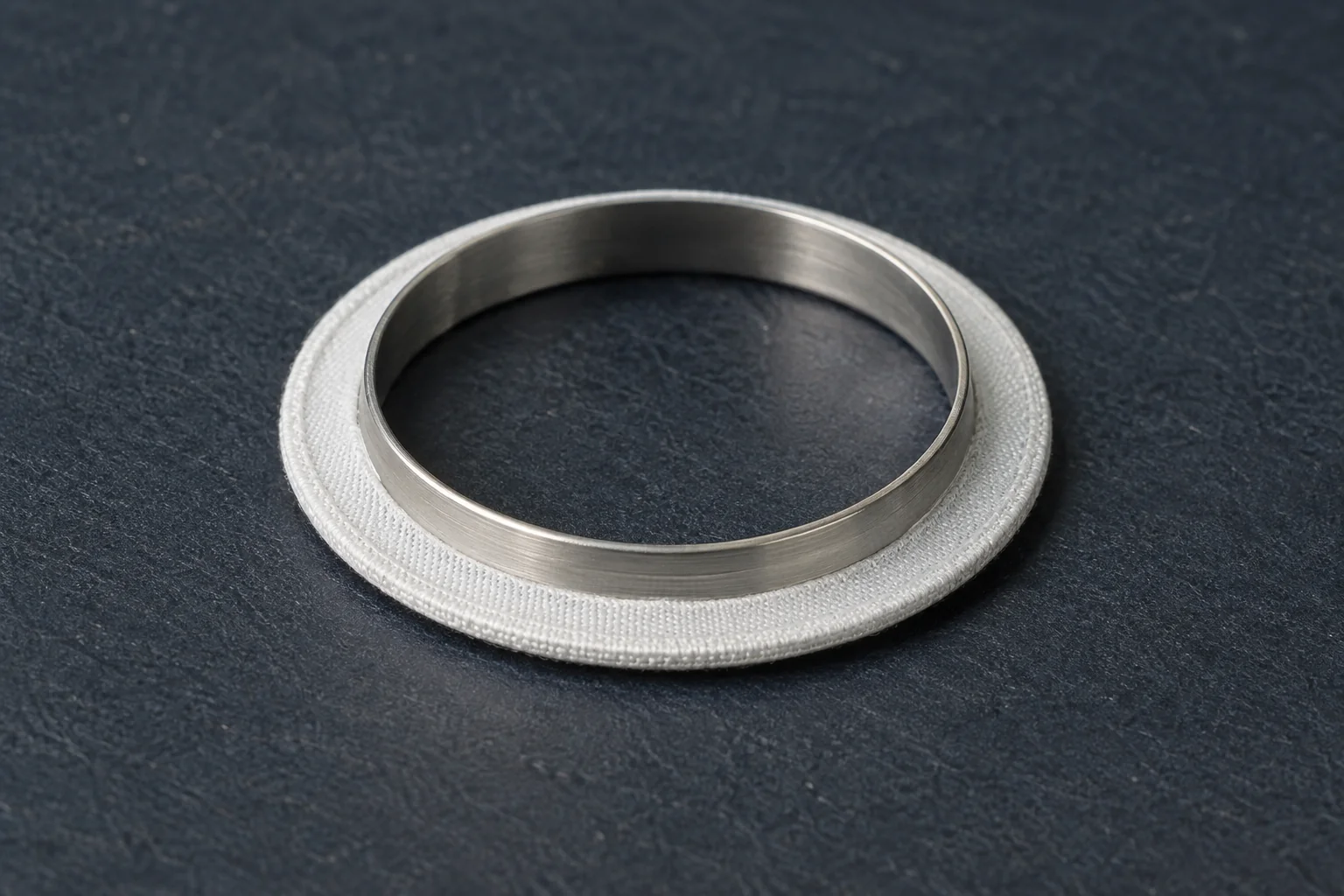
INTERACTIVE COMPONENT STUDY
Select a detail to see how the geometry, textile and seam work together. The study illustrates the construction principles.
ONE ASSEMBLED INTERFACE
The support, textile, seam and usable sewing surface must resolve around one center. The device manufacturer defines the final materials and acceptance criteria.
The underlying circular form establishes the component geometry.
The textile is shaped around that form to create controlled coverage.
The join follows the specified position and assembly sequence.
The finished margin provides the interface used for implantation sutures.
THE FIRST REVIEW
A useful first conversation covers the supporting form, specified materials, assembly sequence, seam position and component acceptance criteria.