
Quick answer
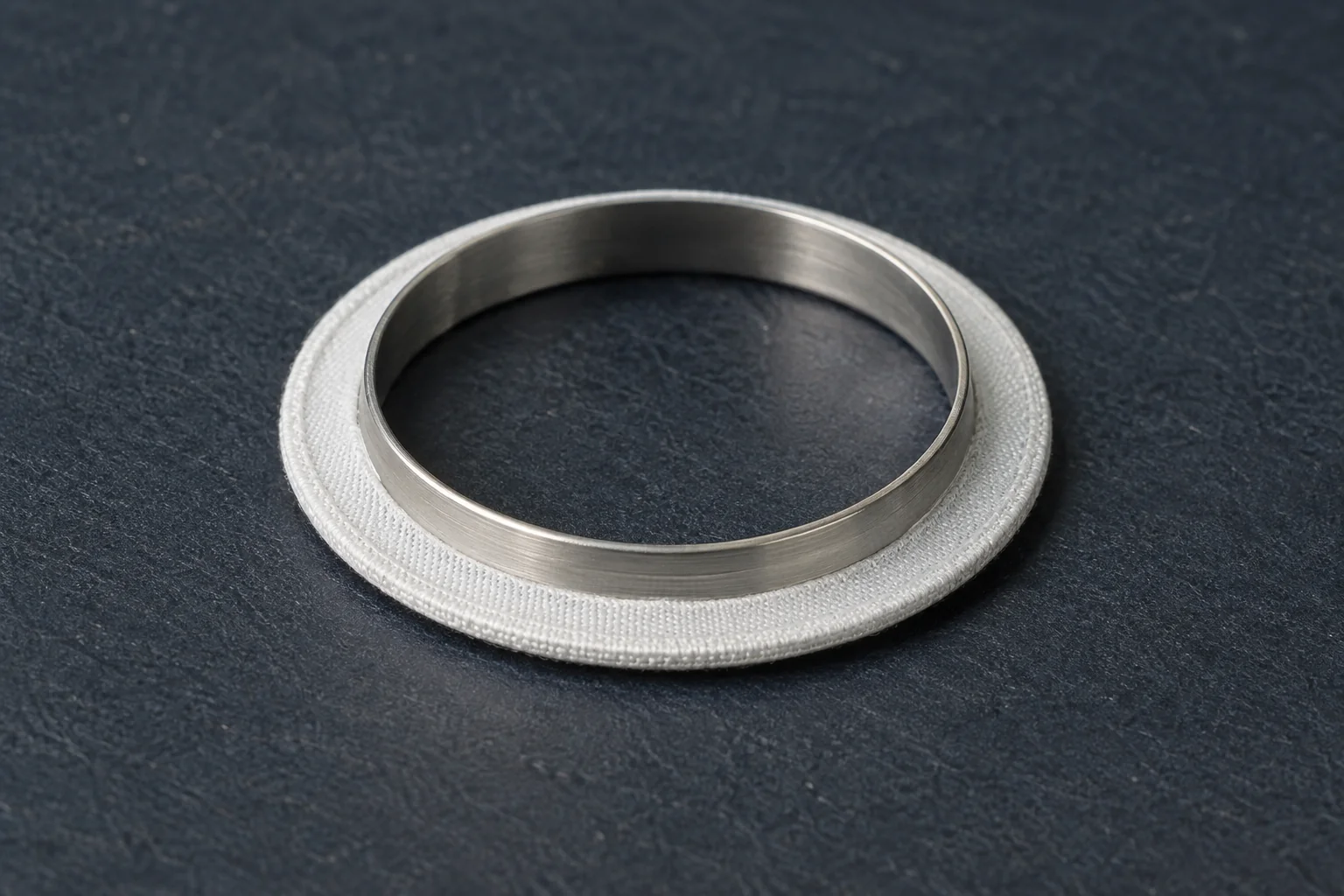
Both components create a textile surface for surgical stitches. A cuff belongs to a replacement valve, while a ring covering follows the shape of a repair ring.
Scope of this guide: This guide explains early manufacturing questions. It is not medical advice, a device specification or a surgical guide. The device manufacturer must approve the design, materials and acceptance criteria.
What is a sewing cuff?
A mechanical heart valve has a sewing cuff around the valve body. The cuff gives the surgeon a textile area for sutures. Its width, shape and attachment method depend on the valve design.
Medtronic describes several cuff designs for its Open Pivot mechanical heart valve. This public example gives context only. It is not an AJSM specification and does not imply a business relationship.
What is an annuloplasty ring covering?
An annuloplasty ring supports the repair of a person’s own heart valve. Its textile covering follows the ring’s curve and gives the surgeon a sewing area.
The Edwards Physio ring is one public example. Its instructions describe a shaped support with a woven polyester covering. Product details from one company cannot define another component.
Sources: Edwards — Physio annuloplasty ring, model 4450 (PDF)
Why does the manufacturing method differ?
A cuff may need a controlled textile margin around a round valve body. A ring covering must follow a curved support without unwanted folds, movement or blocked areas.
The drawing should show the textile position, seam route, exposed areas and inspection points. Material specifications should name the fabric, thread and supporting parts. A photograph is not enough.
What should you bring to the first review?
Start with the exact component and its latest documents. Mark open decisions instead of filling the gaps with assumptions.
- Device and component name, drawing number and current revision.
- Approved textile, thread and support specifications.
- Required textile position, seam route and attachment points.
- Visual checks, dimensions and allowed results.
- Required assembly, inspection and traceability records.
Source notes
Sources and further reading
- Medtronic — Open Pivot mechanical heart valve
Medtronic describes its replacement valve and cuff options. AJSM does not repeat its clinical claims.
- Edwards — Physio annuloplasty ring, model 4450 (PDF)
The document describes the support, woven polyester covering and intended surgical context. It is not an AJSM specification.