
Quick answer
A fixture should hold the component in the agreed position without marking, damaging or hiding it. Its design starts with the drawing and assembly method.
Scope of this guide: This guide covers fixture requirements for early development. It does not approve a fixture for production. The device manufacturer must agree the final method, limits and checks.
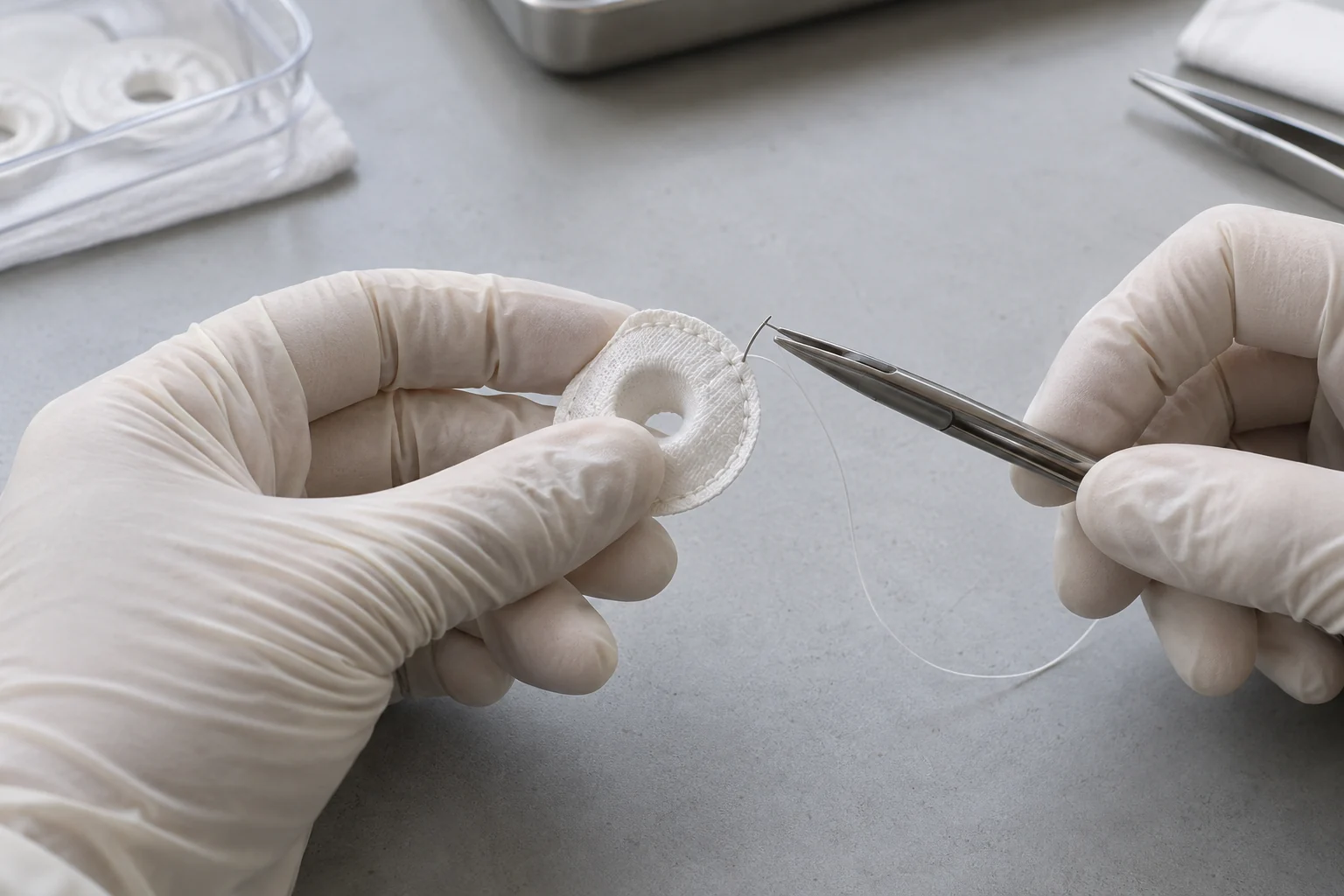
What must the fixture control?
Define the position, orientation and support the fixture must provide. Name the component surfaces it may touch and the areas it must keep clear.
The fixture should reduce unwanted movement. It should not force the part into a shape that hides a fit problem.
Can the operator reach the work safely?
Check needle access, hand position, thread path and visibility around the full seam. The operator should not need to bend the component or remove it for each small step.
Keep visual and dimensional inspection points open. If removal can change the part, define when checks happen while the part is still held.
How will the fixture be controlled?
Give the fixture an identity and revision. Define cleaning, storage, inspection and replacement rules. Record which fixture version was used when the programme requires that link.
Connect fixture changes to the drawing, method and training review. A small tool change can alter position, access or the finished result.
ISO 13485 gives quality-management context for medical-device work. It does not define one fixture design or one change record.
Sources: ISO — ISO 13485: quality management for medical devices
Use this fixture review checklist
Review the fixture with the component, operator and inspector together. Each person sees a different risk.
- Does the fixture use clear drawing references for position?
- Are contact surfaces safe for the component and textile?
- Can the operator reach the full assembly area?
- Can required checks be completed without hidden features?
- Are identity, revision, cleaning and storage controls defined?
Source notes
Sources and further reading
- ISO — ISO 13485: quality management for medical devices
ISO explains the purpose and scope of ISO 13485. The practical checklists in this guide are AJSM suggestions, not text from the standard.